Looking for a creative experience in Houston that gives you something personal to take home? A candle-making class at Studio 786 is a relaxed, hands-on way to spend time with friends, plan a date, celebrate a birthday, or simply try something new. You do not need to arrive knowing candle terminology or how to calculate a formula. We guide the process, while you make the creative decisions that turn simple materials into a candle that feels like your own.

Here is the quick, useful version of what candle making really involves, why details such as the wick and fragrance matter, and what you can expect when you join us.

The experience at a glance

1 hour · $48 per guest · Beginner-friendly · Create one custom luxury candle · Houston, Texas

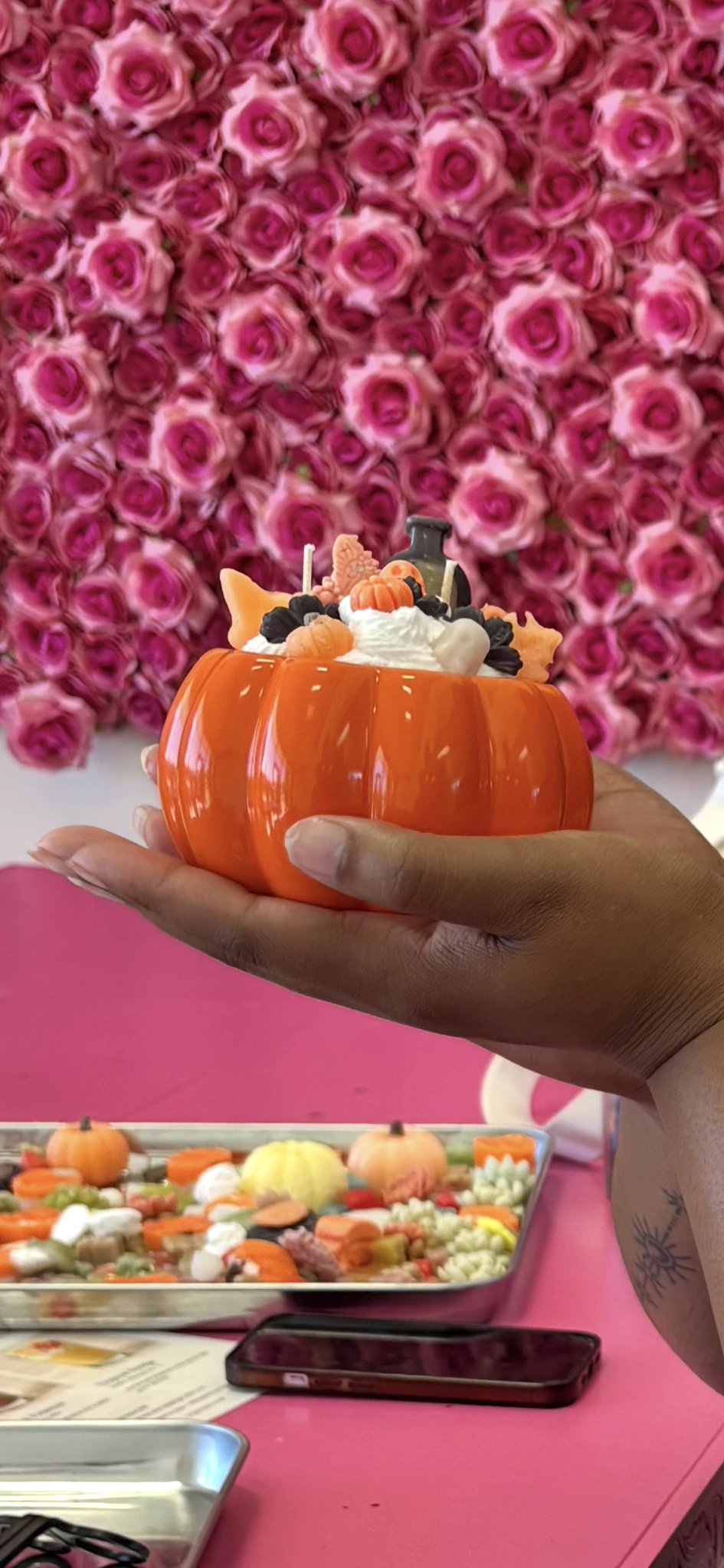
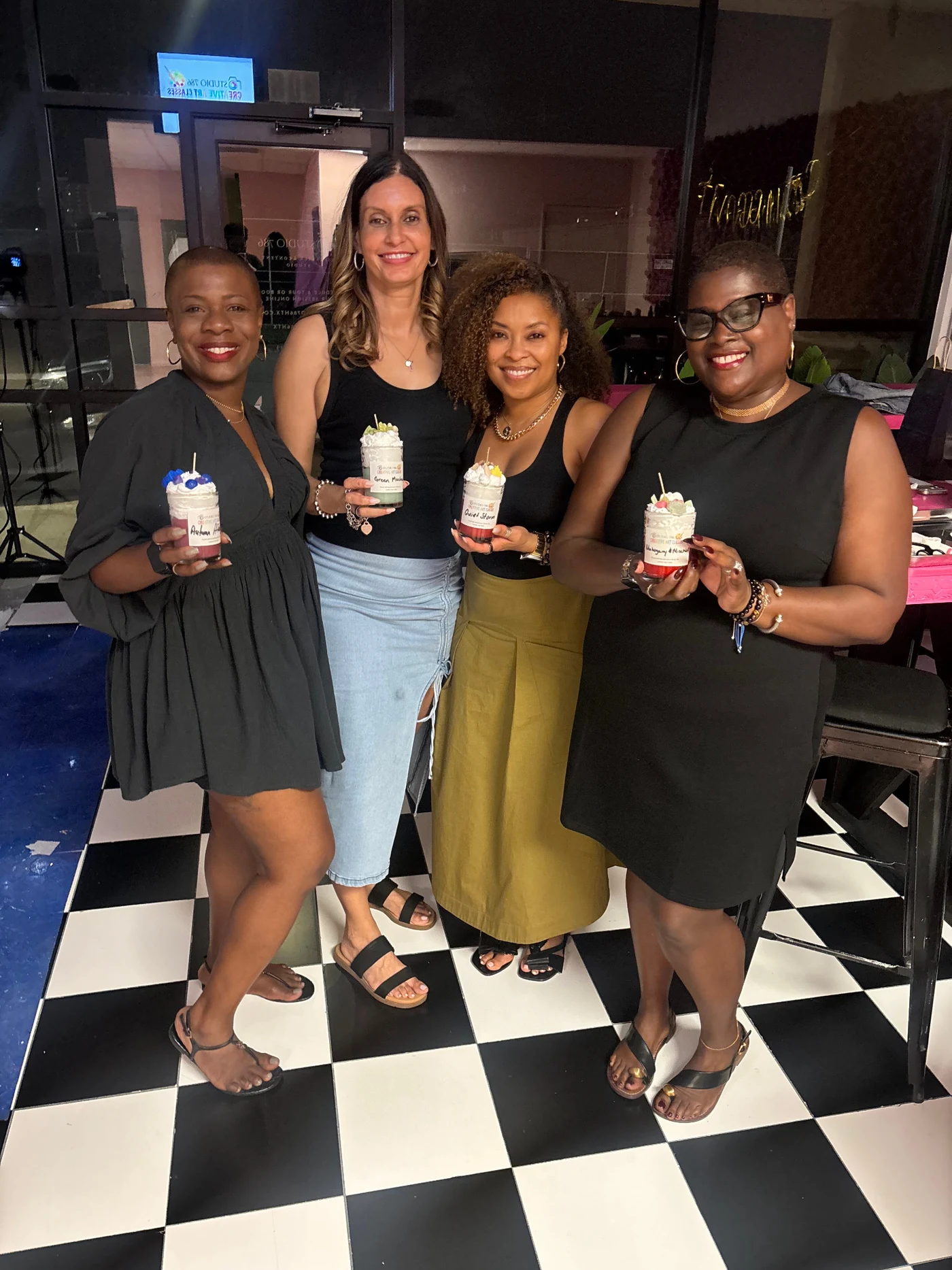
Friends making custom candles together at a colorful Studio 786 workshop

Candle making, without the mystery

At its simplest, a container candle is wax, fragrance, a wick, and a heat-safe vessel working as one system. The wax stores the fragrance and becomes the candle’s fuel. When the candle is lit, the heat melts a small pool of wax. That liquid wax travels upward through the wick and supports the flame. This movement is called capillary action, and it is why a wick does much more than simply “hold the fire.”

The fun part is choosing how the finished candle should feel. Do you want something bright and fruity, warm and cozy, clean and fresh, or deep and woodsy? Your fragrance choices create the personality, while the measurements and materials help the candle perform properly.

The four decisions behind a great candle

1. The wax: Different waxes behave differently. Container wax is designed to remain inside a jar or tin, hold fragrance, and create a smooth melt pool. Soy, paraffin, coconut blends, beeswax, and other waxes vary in appearance, firmness, scent performance, and curing time. During a class, the wax is selected for the vessel and process so guests can focus on creating rather than guessing.

2. The wick: The wick controls how quickly the wax becomes fuel. Its material and size must work with the vessel diameter, wax type, fragrance amount, and any dye. A wick that is too small may leave a narrow tunnel of unmelted wax. One that is too large can create an oversized flame, excessive heat, or soot.

Cotton wicks are common and dependable; flat-braided styles such as LX wicks are designed to curl slightly as they burn, while wooden wicks offer a wider flame and a soft crackle. No wick is perfect for every candle, which is why serious makers test each combination before producing a full batch. The Lone Star wick-sizing guide explains how vessel width, wax, fragrance, and test burns work together.

3. The fragrance: Fragrance is measured by weight, not by counting random drops. Wax can safely hold only a tested amount of fragrance oil, and adding more does not automatically create a stronger candle. Too much oil can separate or interfere with the burn. Temperature, mixing, wick performance, and curing all affect the final scent. Blending is still the most personal part: one fragrance can lead, another can soften it, and a third can add depth.

4. The vessel: A candle container must be made for heat and paired with the correct fill amount and wick. Shape matters, especially the inside diameter. A 4-ounce tin and an 8-ounce tumbler may hold different amounts of wax, but wick choice is based heavily on how wide the melt pool must become—not simply the number printed on the container.

What you actually do during the experience

Your session is guided from beginning to end, but it still leaves room for creativity. A typical Studio 786 candle-making experience includes:

  1. Choosing your fragrance direction. You smell the available options and decide whether your candle should be sweet, fresh, fruity, warm, woody, or somewhere in between.
  2. Building a personal blend. You combine compatible scents in proportions that make sense together instead of simply pouring everything into one cup.
  3. Preparing the vessel and wick. The wick must be secured and centered so it remains in place while the wax cools.
  4. Measuring and mixing. Wax and fragrance are handled carefully and measured consistently. Your instructor guides the temperatures and timing needed for the materials being used.
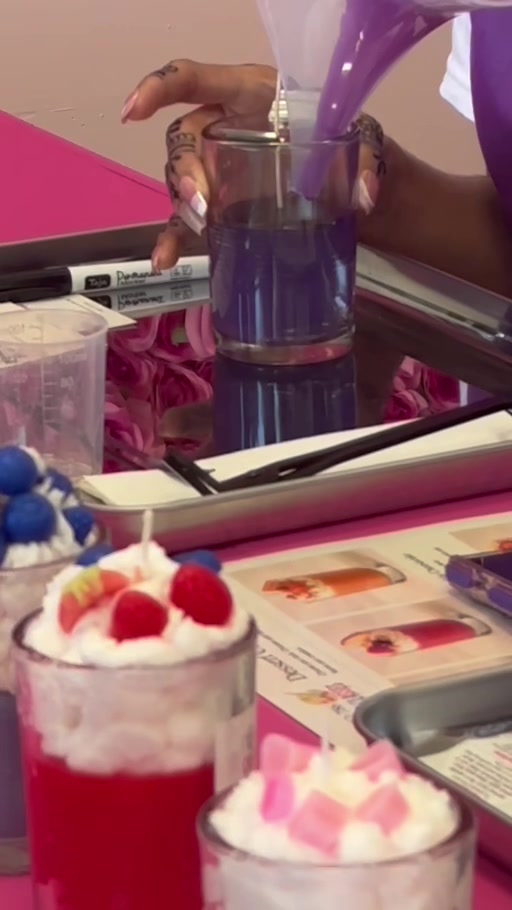
  5. Pouring your candle. This is the satisfying moment when the prepared blend goes into your chosen vessel.
  6. Naming and recording your creation. You give your candle a name and keep a note of the fragrance formula so the experience feels personal from beginning to end.

Ready to create your own candle? Check the available dates and reserve your place.

Why the wick matters more than most people expect

A candle can smell wonderful before it is lit and still disappoint if the wick cannot create a healthy melt pool. Candle makers often talk about “cold throw,” which is the scent you notice from an unlit candle, and “hot throw,” which is the fragrance released while it burns. The hot throw depends on enough wax melting at a controlled rate. That makes the wick part of the scent system—not just a string in the center.

The goal is a steady flame and a melt pool that gradually reaches the appropriate width without becoming dangerously deep or hot. Makers confirm that balance through test burns. If you have ever wondered why two candles of similar size use different wicks, the answer may be the wax blend, fragrance load, color, or vessel shape.

Why your candle needs time before the first burn

A freshly poured candle may look finished, but the wax is still cooling and settling. Cure time allows the structure of the wax and fragrance to stabilize, which can improve how the candle burns and how its scent develops. The ideal wait varies with the wax and formula, so follow the care instructions provided with your candle instead of rushing to light it the moment you get home. Lone Star’s candle scent guide explains how fragrance load, mixing temperature, wick performance, and cure time all influence scent throw.

Your first burn and basic candle care

Before lighting your candle, trim the wick to about one-quarter inch. Keep the wax pool free of wick trimmings and debris, place the candle away from drafts, and never leave it unattended. Let the first burn form an even melt pool according to the care instructions, then extinguish the candle safely. The National Candle Association also recommends stopping use when roughly one-half inch of wax remains in a container candle so the bottom does not overheat.

Who is the candle-making experience for?

This experience works beautifully for date nights, birthdays, friend outings, small celebrations, team activities, and anyone searching for a memorable creative activity in Houston. Beginners are welcome, and no previous candle-making or art experience is needed. You get the satisfaction of learning why a candle works while still enjoying the social, creative side of making one.

Make your own candle at Studio 786

Studio 786 is located at 7636 Harwin Dr., Suite 308, Houston, Texas 77036. Choose an upcoming session, bring your creativity, and we will guide you through the rest—from fragrance selection to the final pour.